

Key takeaways:
- The 2026 World Cup is setting new benchmarks for viewership, with digital platforms playing an increasingly central role in global sports consumption.
- Fans are engaging as much with emotion, culture, and shared experiences as with the football itself, expanding what rights holders should capture and distribute.
- AI-powered content creation platforms help organizations instantly transform every emotional moment into multi-format stories that maximize engagement throughout major events.
It was built up as the biggest sporting event in history. More teams, matches, host countries, and host cities than in any previous edition. The largest competition in terms of sheer physical scale. A record number of production crews and cameras per match. And, of course, a plethora of larger-than-life stars, of various generations and countries, to headline the global showcase.
And so far, the 2026 World Cup has lived up to the hype.
On the pitch, the 23rd edition of the WC has been a goal-fest. Through the first two rounds of the group stage, the tournament was averaging 2.94 goals per game, the most since 1970. And the stars have delivered in spades; during the first round games, Lionel Messi, Kylian Mbappé, Erling Haaland, and Harry Kane all scored at least twice in the span of 25 hours, with Cristiano Ronaldo and Vinícius Júnior joining the party with brilliant moments later on.
Off the pitch, the World Cup has performed just as well, if not better, captivating global audiences and setting records across multiple markets. As the group stage comes to an end, here’s an overview of current viewing trends, watching behavior, and the types of content that capture fans’ imagination.
New Viewing Benchmarks
Through its first two weeks, the World Cup has delivered record-breaking viewership. In the US, for instance, matches averaged 5.9 million viewers on Fox Sports and 5.5 million on Telemundo (NBCUniversal) – a triple-digit percentage increase for both networks compared to the 2022 World Cup in Qatar. The USMNT opener against Paraguay (18.04 million viewers) was the most-watched men’s World Cup English-speaking telecast in US history.
Historic viewing figures – and, in some cases, unprecedented market shares – were posted across the globe. Notable examples include:
- In England, ITV’s coverage of the opening match against Croatia peaked at 15.4 million – the highest TV audience peak in the UK this year – and reached more than 20 million people overall.
- Sweden’s opening match against Tunisia generated a 96% television market share. Norway’s match against Iraq, the country’s first World Cup appearance in 28 years, attracted 97% of TV viewers.
- Mexico’s match against South Korea delivered the country’s highest World Cup audience of the 21st century, attracting an average audience of 25.5 million viewers.
- Brazil vs. Haiti attracted an average audience of 30.7 million viewers, making it the country’s highest-rated television broadcast of the year.
How Fans Are Watching
Perhaps even more interesting than the number of people watching is how they are watching, as the balance between linear television and digital platforms continues to shift toward the latter. Here, too, milestones abound:
- Brazilian YouTube channel CazéTV, which will stream all 104 World Cup matches for free, made history during Brazil’s match against Morocco, becoming the first channel on non-Chinese platforms to surpass 10 million concurrent viewers (the broadcast ultimately peaked at more than 12 million).
- NBC’S streaming platforms, Peacock and the Telemundo app, are averaging 2.3 million viewers through the first 40 matches – up +277% compared to the same stage of the previous World Cup.
- In South Korea, the national team’s match against Czechia, which aired on streaming platform CHZZK, set a new record for Korean-language livestreams with 3.86 million viewers at peak – almost doubling the previous record.
- During the first week of the tournament, YouTube enjoyed a 311% jump in its watch time, fueled by official streams, watch-alongs, and related content.
When Fans Become the Story
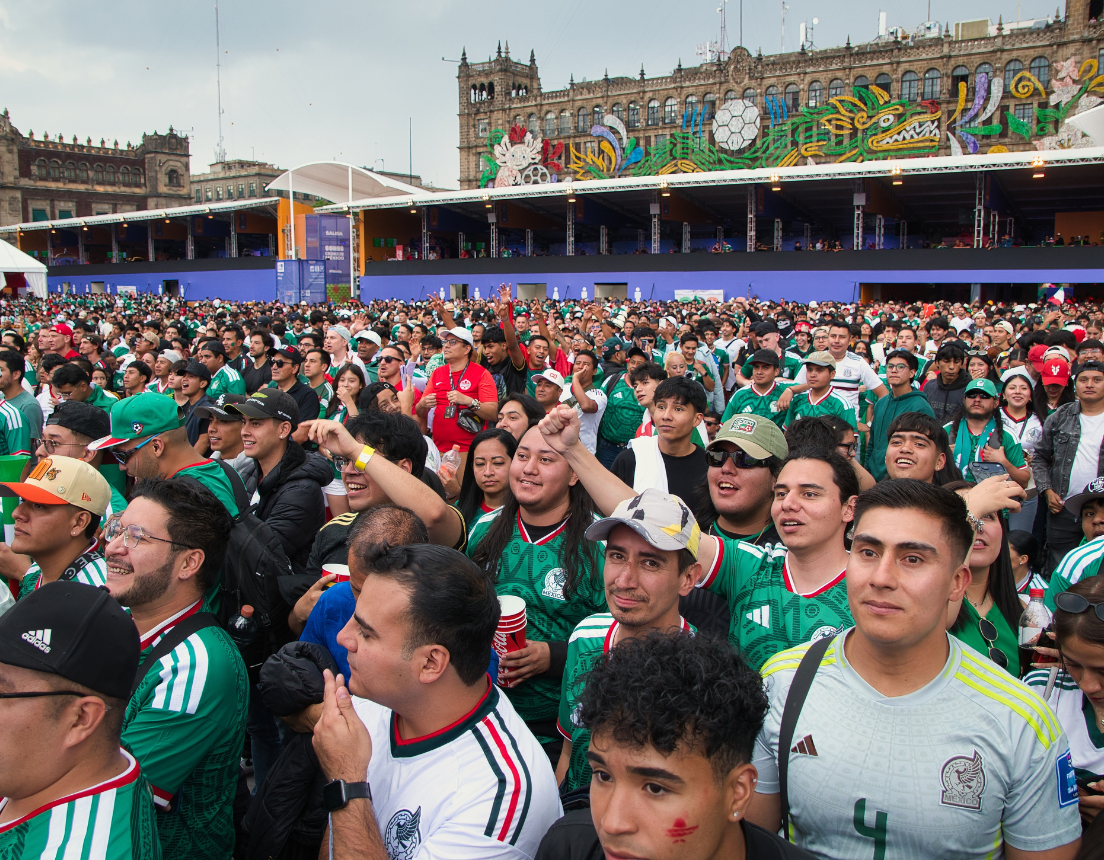
Most World Cup-related content is consumed, as expected, on social media platforms. TikTok, FIFA’s first-ever preferred platform, is leading the way with almost 19 million posts across WC hashtags, as of June 24. Interestingly, the type of content that resonates most with fans so far is not about the football being played; it’s about the fans themselves.
From Scotland’s Tartan Army taking US cities by storm to Norway supporters performing the Viking Row, fan culture has produced numerous vital moments during the group stage. “There’s something here about rekindling the very, very faint fires of a kind of globalism that looks positive,” explained John Wihbey, professor of media and communications technology at Northeastern University. “It’s a celebratory form of high-emotion, and that’s cool to see.”
Other content trends emerging in this tournament include fans documenting the emotional end of their World Cup journeys, and sharing family experiences centered around the competition.
Even when the fans are not the story, emotional content still reigns supreme; the most‑watched clip across BBC Sport’s social media channels so far, for example, is Netherlands captain Virgil Van Dijk’s take on the hydration breaks.
The first two weeks of the World Cup have reinforced a familiar lesson for sports organizations: the biggest moments are no longer confined to the pitch. Fans are captivated just as much by celebrations, heartbreak, traditions, and shared experiences as they are by goals and saves. And if the group stage has set the tone, the knockout rounds promise even more unforgettable moments waiting to be told.
Actionable insights:
- Prioritize emotional storytelling by capturing fan reactions, traditions, and behind-the-scenes moments alongside match highlights.
- Publish content in multiple formats and across platforms to match how fans consume major events today.
- Use AI-powered tools to identify, create, and distribute standout moments before the conversation moves on.